Construction Site Safety — How Much Does AI Actually Reduce Accidents? (2026)
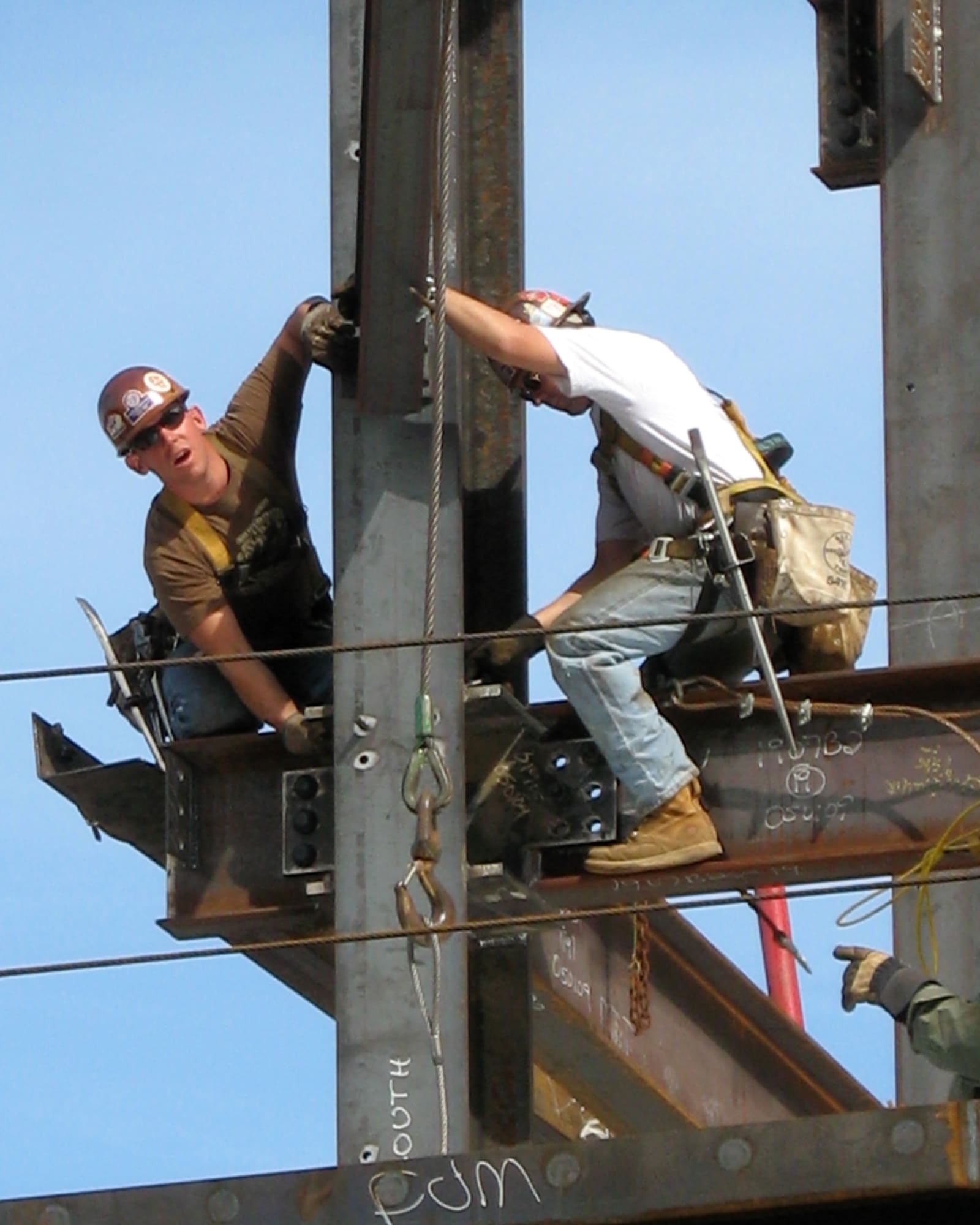
1. Background — Risk Is Structural, Not Accidental
Construction's risk is built into the industry. Per the US BLS and OSHA, construction employs about 7% of the workforce but accounts for roughly 21% of private-industry fatal injuries — high in both share and absolute risk.
By single cause, falls dominate. Of 1,034 US construction deaths in 2024, falls to a lower level numbered 389 — about 38%, the largest single cause. The cost is steep too: occupational-safety research estimates the societal cost of one workplace death at roughly $1.46 million.
Korea is no different. Per MOEL's "2024 Industrial Accident Status," of 589 investigated accidental deaths, construction accounted for 328 (39.7%), the highest of any sector. Falls dominate the cause of death as well — across all industries, "falls from height" claimed 278 lives, more than six times "slips/trips" (41) — and high-rise, outdoor construction work drives that statistic.
2. Cross-Country Comparison — Korea, US, Japan
Construction safety is not one country's problem. In all three, construction holds the largest (or among the largest) share of workplace deaths, and within that, falls are the single biggest cause. Regulatory approaches and absolute numbers differ.
| Metric | Korea | US | Japan |
|---|---|---|---|
| Construction deaths (yr) | 328 (2024) | 1,034 (2024) | 223 (2023) |
| Share of all workplace deaths | 39.7% | ~21% | ~30% |
| Falls within construction deaths | 55.6% (2023) | ~38% (2024) | ~43% |
| Key regulation | Serious Accidents Punishment Act (2022–) | OSHA fall-protection enforcement | Industrial Safety & Health Act |
| Sources | MOEL·KOSHA | BLS·OSHA | MHLW·JNIOSH |
Construction is #1 or near the top in each country's share of workplace deaths. The order appears as Korea 39.7%, Japan ~30%, US ~21% — but the bases differ (Korea = accidental deaths excl. disease; US = private sector; Japan = all industries), so treat the ranking as directional, not an exact comparison.
Within construction deaths, falls are the single biggest cause in all three. Per KOSHA, of 356 Korean construction deaths in 2023, 198 were falls (55.6%); Japan is ~43% (JNIOSH), and the US ~38% (2024).
The conclusion converges — falls are the single largest cause of construction deaths, and catching fall hazards in advance addresses 38–56% of fatalities. (That figure is the share falls represent — not the reduction AI delivers.)
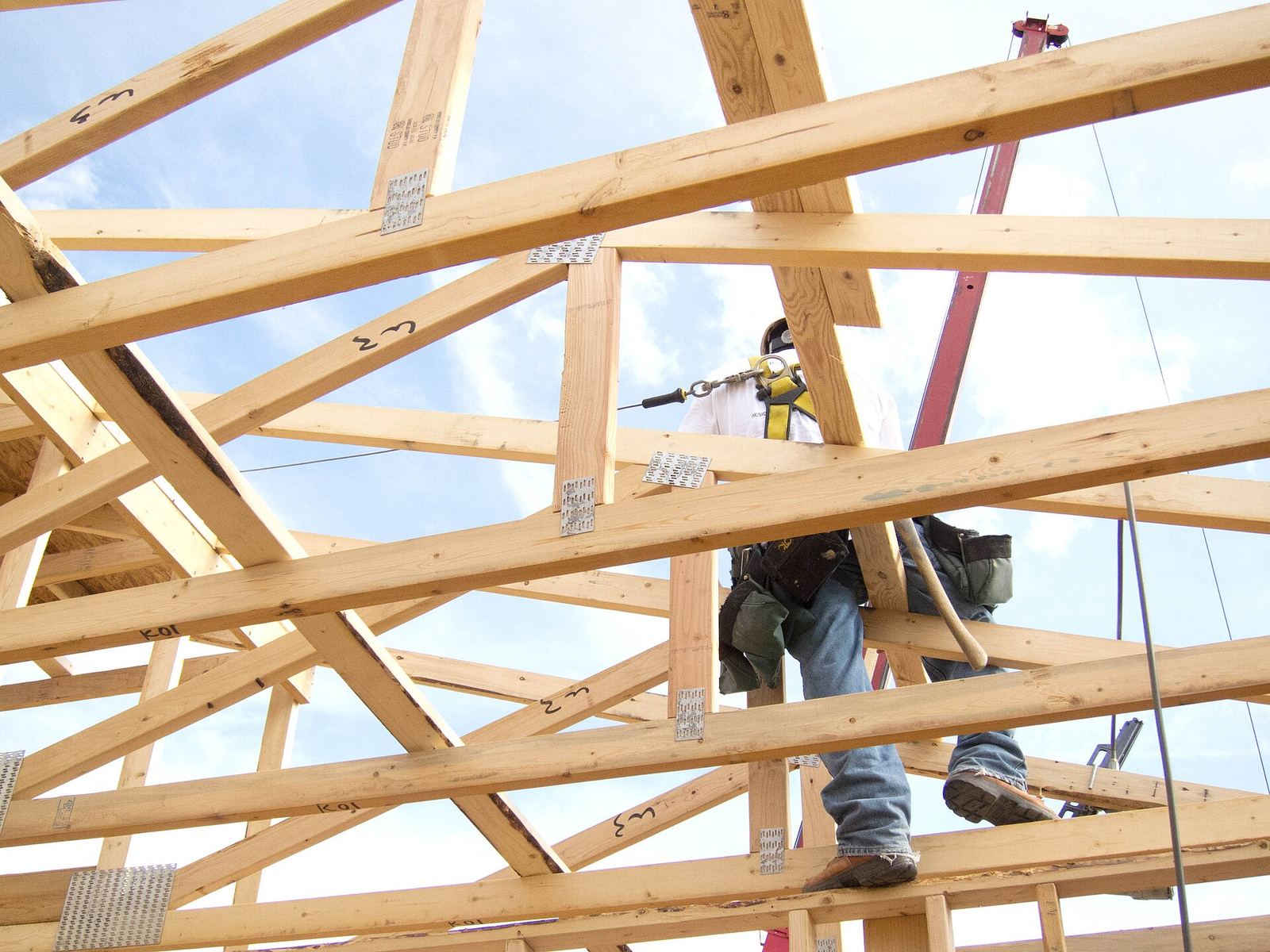
3. AI Reverses the Order — From Reactive to Preventive
Traditional safety management was reactive — analyzing causes after an accident. Computer-vision AI reverses that order: site cameras "see" working conditions, "learn" from past accident data, and raise alerts before an accident happens. Through 2025–26 the technology has moved past the pilot phase and is spreading fast on large infrastructure projects.
| Application | What it does |
|---|---|
| PPE detection | Real-time detection/alerting of missing helmets or protective gear |
| Fall hazard | Detects openings, missing harness points, dangerous edges |
| Equipment collision | Alerts on heavy-equipment approach and worker proximity |
| Restricted zones | Instant alert on entry into no-go areas |
| Unstructured analysis | NLP on inspection/incident reports to extract recurring hazards |
These aren't vague "some companies" — named products with real data exist. Per Equipment World, the engine "Vinnie" from safety-AI firm Newmetrix was trained on a vast body of incident data and over 17 million construction-site images (per the company), auto-detecting 100+ hazard types and predicting each project's risk level. Hong Kong / Southeast Asia–based viAct uses scenario-based computer vision to flag combined heavy-equipment and working-at-height risks and alerts EHS managers in real time.
So how big is the effect? Pulling together independent studies and multiple reports, sites adopting computer-vision safety solutions saw accidents fall by roughly 20–50% (some reports up to 60%). But the numbers vary widely by site size, scope and operational maturity — a Deloitte analysis puts it closer to 20%. The point isn't "install it and accidents halve," but that the effect emerges when AI is combined with data and operations.
4. The Payoff — Regulatory Results and ROI
The shift to prevention shows up in regulatory statistics too. Under OSHA's National Emphasis Program on falls, federally investigated fatal falls dropped from 234 to 189 — about a 20% decline. Safety isn't a compliance "cost" but a profitable investment: per widely cited OSHA / insurance-industry estimates, safety programs return $4–6 for every $1 invested. Given roughly $1.46 million in direct and indirect loss per death, the economics of a system that meaningfully cuts accidents are clear.
5. The Korean Context — The Serious Accidents Act and Unstructured Data
In January 2022, Korea enacted the Serious Accidents Punishment Act, reframing site safety not as a safety officer's individual issue but as management's legal responsibility — a CEO can face criminal liability after a fatality. The weight of the regime clearly grew.
Yet regulation alone did not change the statistics. Construction deaths remained #1 even after enactment — 328 in 2024, 39.7% of all sectors. Severity of punishment is not the same as strength of prevention. Accidents fall only when stopped on site, before they happen — not in court.
The question is "what do you watch to prevent it." Most falls stem from hazards visible in advance: an unfastened harness, an open hole, disordered scaffolding, a missing helmet — all "visible" right up to the moment of the accident. The problem is simply that people can't watch every zone around the clock. Two kinds of data fill that gap.
First, computer vision uses site cameras to catch "immediate hazards" — no helmet, open edges — in real time, extending human sight across dozens of cameras. Second, unstructured-text analysis (NLP) reads the inspection logs, incident reports and permits-to-work (PTW) that used to pile up in cabinets and PDFs, surfacing "recurring hazards and precursors" in the same trade and zone. Not one accident, but hundreds of records reveal the pattern.
When both axes are integrated with site data, accidents shift from a statistic tallied after the fact to an event that can be blocked beforehand — technology turning the "responsibility" created by the law into "prevention."
6. Takeaway
The three countries' data point to one conclusion: the biggest cause of construction death is falls; falls are hazards "visible" in advance; and computer vision plus unstructured-data analysis can catch them before the accident. But the effect comes from "combining with data and operations," not from "adopting a tool" — which is why the same technology yields 20% in one place and over 50% in another.
DT Solution has HSE text-analysis capability that mines on-site unstructured text — inspection and incident reports — to extract recurring hazards. We combine vision-based hazard detection and unstructured-data analysis with PMIS and site data to raise both serious-accident prevention and operational efficiency. If you need to put safety data to work, talk to us.
· MOEL — 2024 Industrial Accident Status (Korea)
· KOSHA — Industrial Accident Status (construction fall share)
· BLS — Census of Fatal Occupational Injuries 2024
· OSHA — Decline in fatal-fall investigations (234→189)
· Nippon.com / MHLW — Workplace Deaths in Japan 2023 (223 in construction)
· JNIOSH — Accidents by Falls in the Construction Industry (Japan)
· Equipment World — Newmetrix (Vinnie) AI for Construction Risk
· U.S. Compliance — Safety ROI ($1 → $4–6)